If you have a classic car waiting in the garage, the first question is usually the hardest one to answer: how much will it cost to restore it? The honest answer is that no two restorations cost the same. The price depends on how much of the car needs work, what the metal looks like under the paint, which parts you can still buy, and what kind of finished car you want.
This guide explains where the money goes in a restoration and how we build an estimate at our shop in Wallingford, Connecticut, so you can plan a realistic budget before the first bolt comes out.
Why Restoration Costs Are Hard to Predict
Most of the cost of a restoration is labor, and most of that labor is time spent on things you never see in the finished car. Barry Kluczyk, writing for Hemmings Muscle Machines, put it this way:
“Most of it comes in the form of prep work, including bodywork to straighten and repair the sheet metal, block sanding the body before painting, and color sanding it afterward to achieve a deep finish,” wrote Kluczyk. “Laying down the color requires the least amount of time in the project; and, unless you’re taking the car to a splash-and-dash paint shop that may or may not mask off the fender badges, it typically takes hundreds of hours to do correctly.”
The other reason is that a car can look solid and still hide problems. Rust under seam sealer, old filler over damaged panels and tired wiring often only show up once the car is apart. We cover the most common ones in our post on hidden problems found during a classic car restoration.
What Drives the Cost of a Classic Car Restoration
The type of build
A car restored to factory original uses OEM or OE spec reproduction parts and has to match how it left the factory. A restomod keeps the classic look but adds modern brakes, fuel injection, suspension or comfort upgrades. Either can be simple or very involved, and the parts and hours change with every choice. If you are still deciding, our guide to restoration or restomod walks through the differences.
Frame-off or frame-on
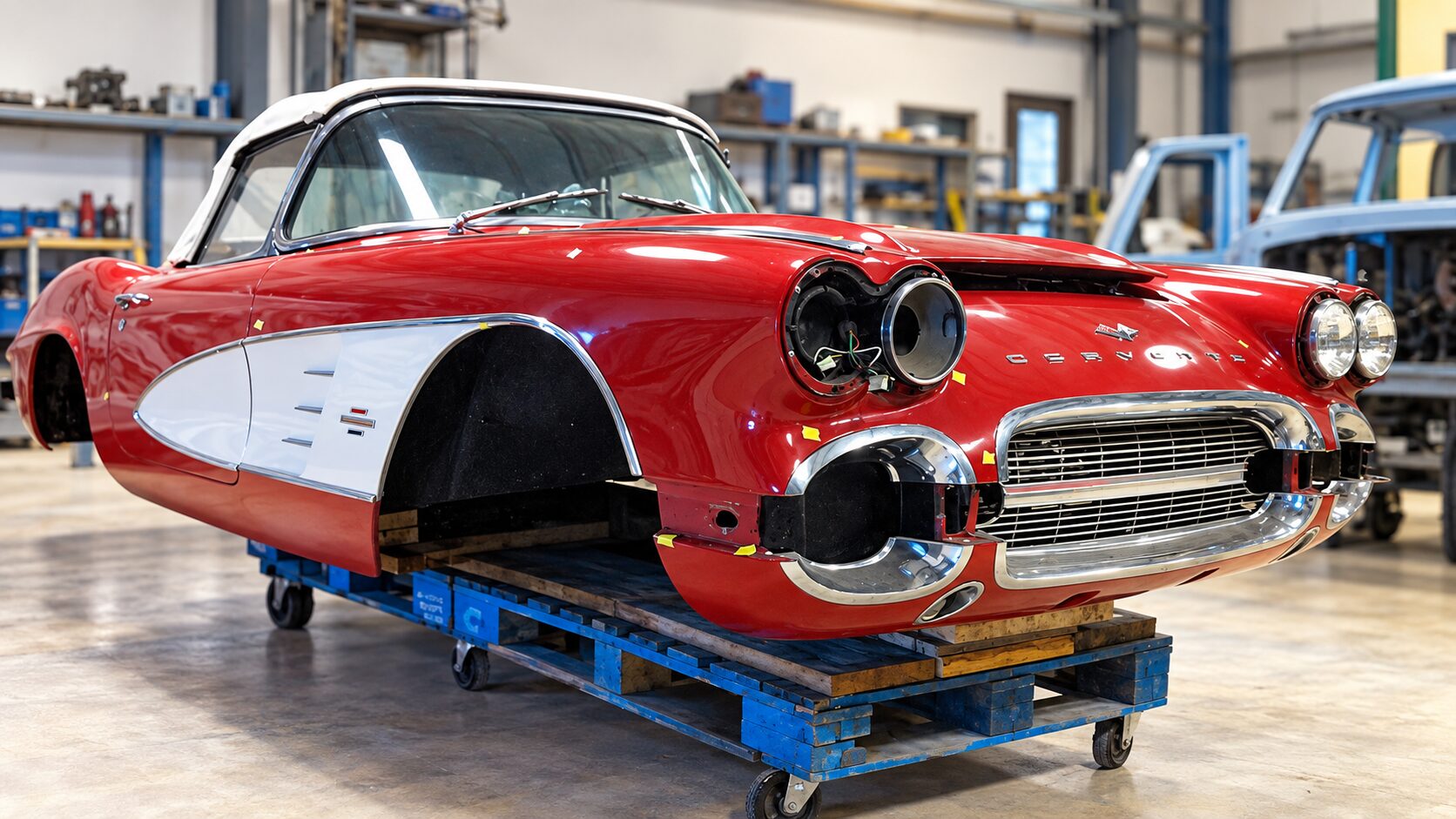
A frame-off restoration separates the body from the frame so every part can be stripped, repaired and refinished. It is the most thorough approach and takes the most hours. A frame-on restoration leaves the body in place and suits cars with a sound structure. We explain both in frame-off vs frame-on restorations.
Rust and metal work
Rust repair is often the biggest unknown. Patching a small area is very different from replacing floors, rockers, quarter panels or frame sections. When replacement panels are not available, they have to be made by hand in our metal fabrication shop, which adds hours.
Bodywork and paint
A show-quality finish needs the body straight before any color goes on. That means repairs, blocking and priming until every panel lines up, then wet sanding and polishing after the paint. The level of finish you want has a direct effect on the hours. See our painting and refinishing page for how we approach it.
Engine, drivetrain and mechanical work
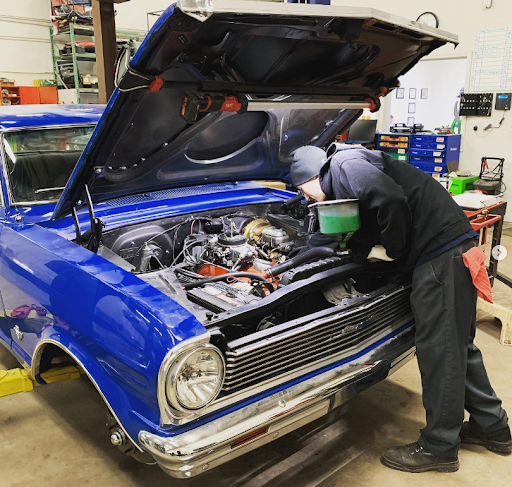
A tune-up and new seals cost far less than a full engine rebuild, and a rebuild costs less than an engine swap with a new transmission. Brakes, suspension, steering and wiring add to the total, especially when they are upgraded rather than rebuilt to stock.
Parts availability and quality
Popular cars like early Mustangs, Camaros and Chevy trucks have plenty of reproduction parts. Rarer cars may need used, rebuilt or custom-made parts, which take longer to find and cost more. The quality of reproduction parts also varies, and poor parts often need extra work to fit.
How We Estimate a Restoration
Because every car is different, we cannot give an exact price before we see it. What we can do is give you an initial estimate before the build starts, based on the car, its condition and the result you want.
Once the car is fully taken apart and the body is stripped to bare metal, we give you a second assessment. This is the point where hidden damage shows up, so the second look is much more accurate. It is still a ballpark figure and not a guarantee, because pricing is based on the time, materials and parts the job actually needs.
Throughout the build we keep in regular contact. If we find something unexpected, we explain it and get your approval before we move ahead. You are never surprised by work you did not agree to.
You can supply your own parts as long as they do not hold up the build. We are not responsible for the quality of customer-supplied parts or for labor if one of them fails, which is why we use vendors whose parts we can stand behind. To reserve a place in our schedule, we take a deposit equal to one hour of our posted labor rate, which is credited to your final bill.
How to Keep Your Restoration on Budget
Start with a clear goal. Decide whether you want a reliable weekend driver, a factory-correct show car or a modern restomod, because each one leads to a different plan and budget.
Buy the best car you can afford. A car with a solid body and less rust almost always costs less to restore than a cheaper car that needs major metal work. Our tips for buying a classic car can help you spot problems before you buy.
Plan for the unknown. Leaving room in your budget for surprises found during teardown keeps the project moving instead of stalling halfway.
Consider doing the work in stages. Some owners start with the mechanical work so the car is safe to drive, then move on to body and paint later. We can help you plan the order that makes sense for your car.
Get an Estimate for Your Car
The best way to find out what your restoration will cost is to tell us about the car. Send a few photos and a description through our Request an Estimate form and we will usually get back to you within one business day. You can also call us at 860.852.3275 or visit our restoration services page to see how we work.