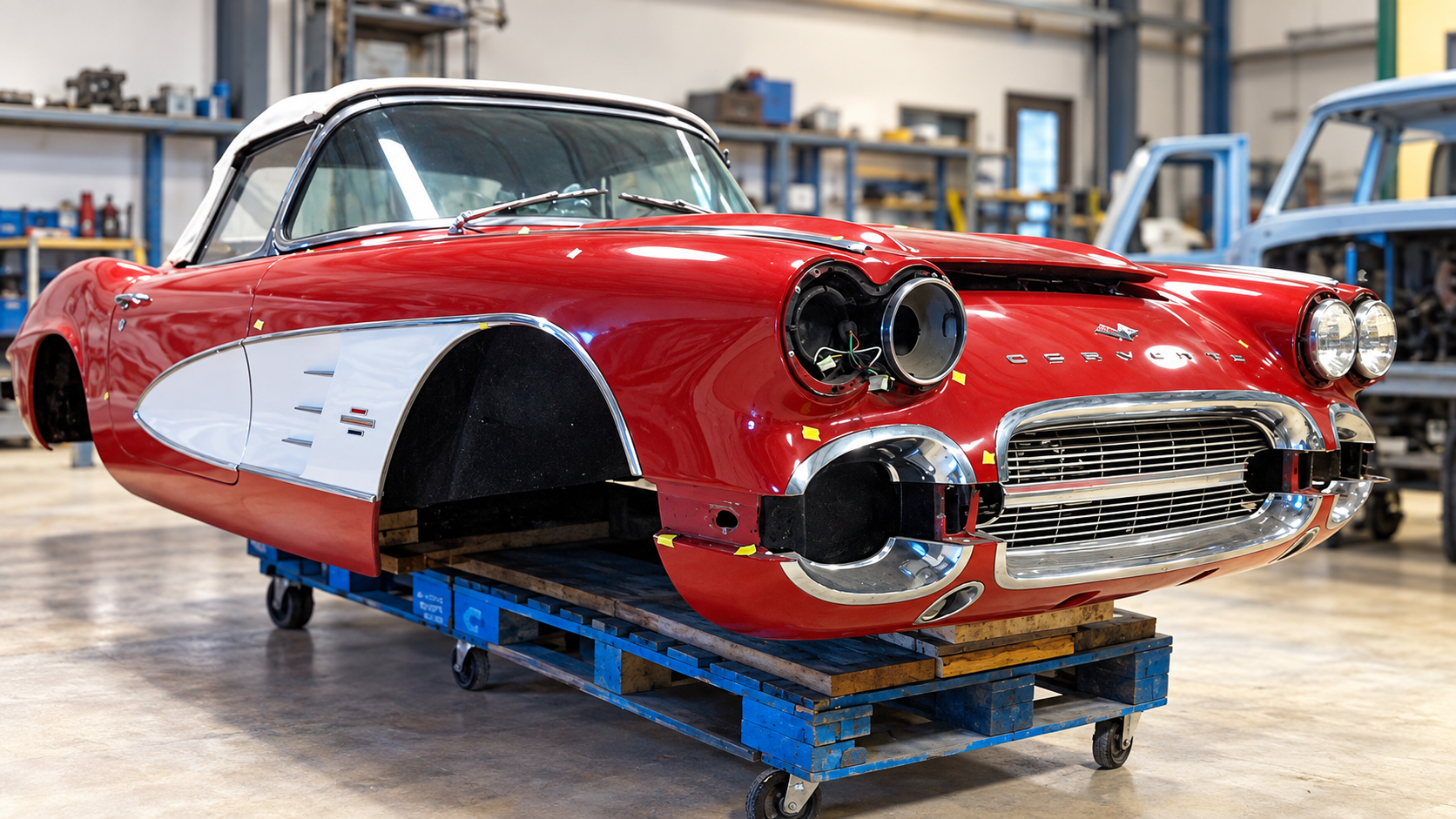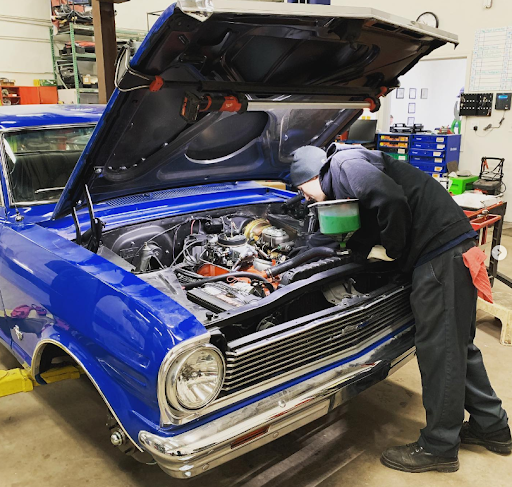
One of the biggest questions classic car owners have before beginning a restoration is: What will we find once we take the car apart?
Even a classic that looks relatively solid from the outside can hide decades of deterioration, previous repairs, and aging components. That’s why a thorough evaluation—and realistic expectations—are important when beginning a classic car restoration.
Here are some of the problems that may not become apparent until restoration work begins.
1. Rust Where You Can’t See It
Visible rust may only tell part of the story. Once trim, carpeting, body panels, and other components are removed, corrosion can sometimes be discovered in areas such as floor pans, rocker panels, wheel wells, frame sections, trunk floors, and mounting points.
Older repairs or body filler may also conceal corrosion that needs to be properly addressed before refinishing.
2. Previous Repairs That Weren’t Done Correctly
A 40-, 50-, or 60-year-old vehicle may have passed through several owners and repair shops.
During disassembly, we may discover evidence of previous collision repairs, excessive body filler, poorly installed replacement panels, questionable welds, or modifications that weren’t completed properly.
Correcting this work is often essential to building a solid foundation for the restoration.
3. Aging Wiring and Electrical Problems
Electrical systems can be another hidden concern. Brittle wiring, damaged insulation, corroded connections, improvised repairs, and outdated components can create reliability—and potentially safety—issues.
Depending on the owner’s goals, repairing or replacing portions of the electrical system may make more sense than simply reconnecting aging components.
4. Worn Suspension, Steering, and Brakes
A car can look beautiful and still have decades-old mechanical components underneath it.
Bushings, ball joints, steering components, brake lines, hoses, wheel cylinders, bearings, and other wear items may require attention. These systems become especially important when the owner plans to regularly drive the classic rather than simply display it.
5. Engine, Cooling, and Fuel System Issues
Long periods of storage can create their own problems. Old fuel, deteriorated hoses, leaking seals, corrosion, clogged passages, cooling system problems, and worn engine components may not reveal themselves during an initial visual inspection.
Why Experience Matters During a Restoration
Discovering hidden problems doesn’t necessarily mean a vehicle shouldn’t be restored. It’s part of the reality of working with automobiles that have decades of history behind them.
The important part is identifying issues correctly, determining what truly needs attention, and communicating those findings with the owner before moving forward.
At Innovative Restorations in Wallingford, Connecticut, we approach each project individually. Whether you’re considering a traditional restoration, repairing a family heirloom, or planning a restomod, understanding what’s underneath the surface is the first step toward doing the job right.
Thinking about restoring your classic? Contact Innovative Restorations to discuss your vehicle and your goals.